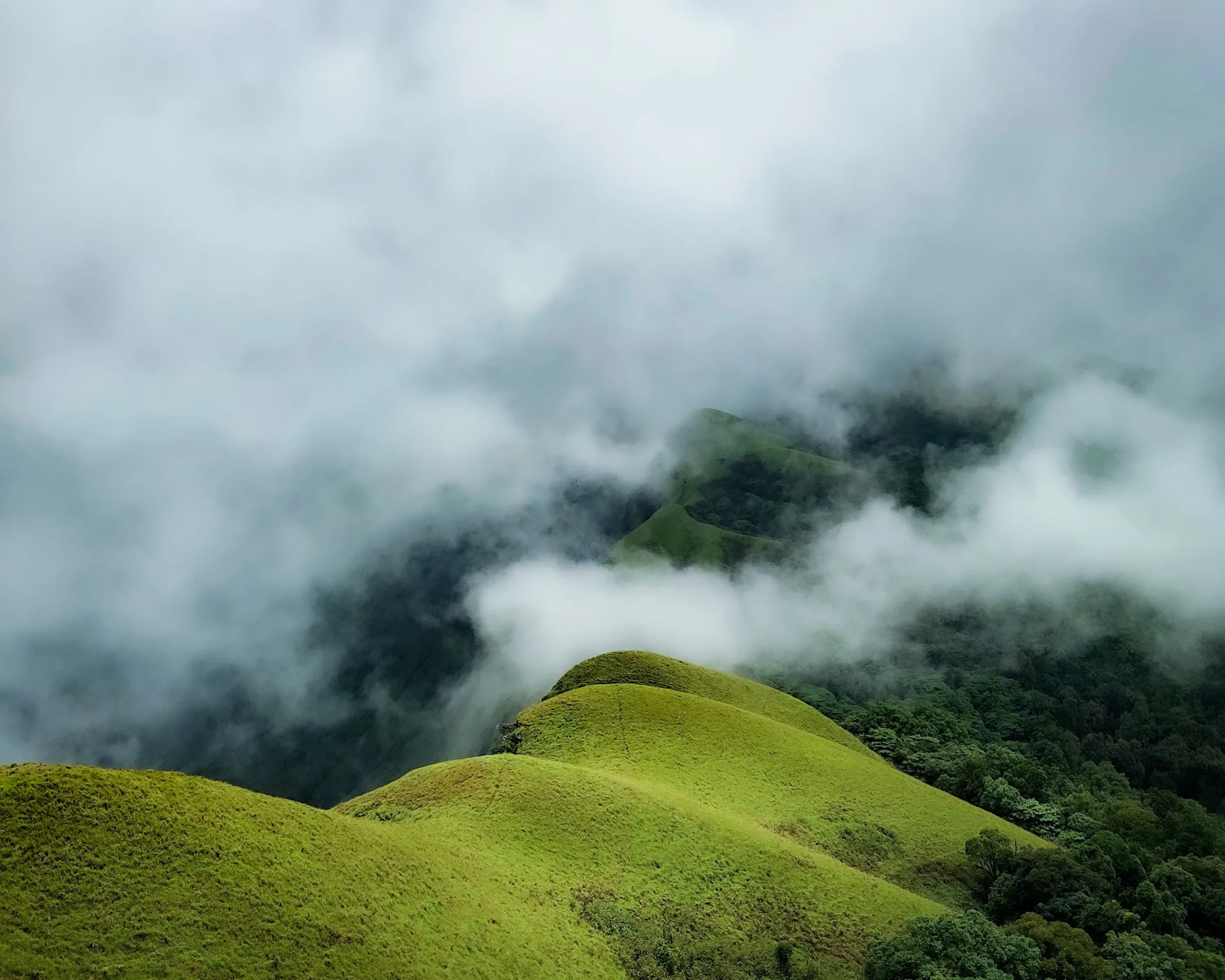
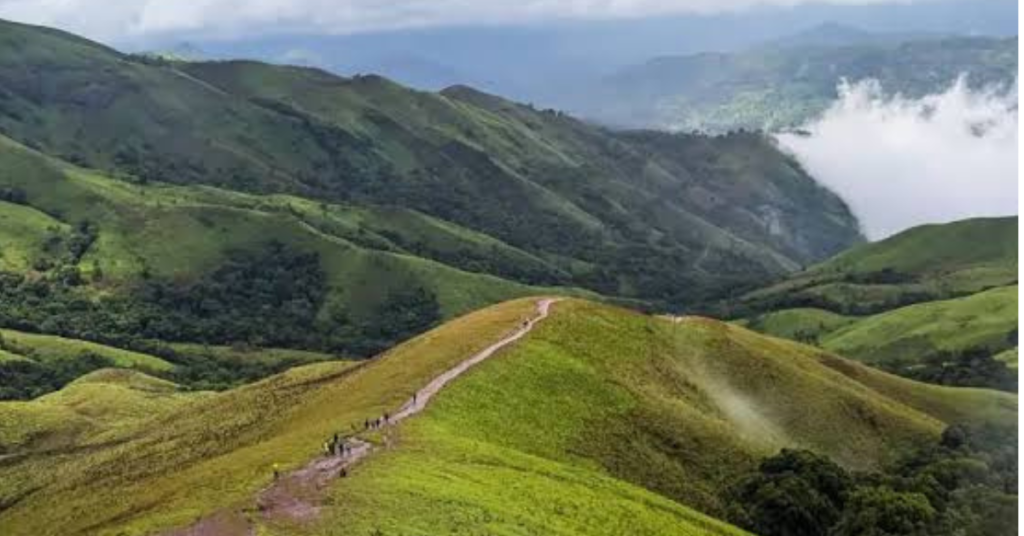
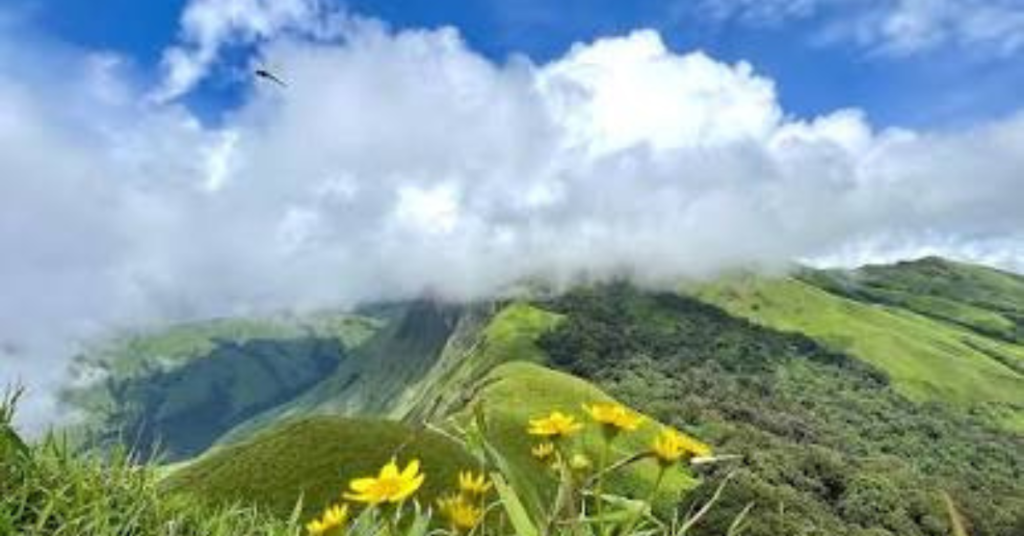
The Netravati Peak Trek is one of the most scenic offbeat treks, located in the Kudremukh forest range of Karnataka’s Western Ghats near Chikmangalur. The trek is known for its rolling grasslands, dense shola forests, mist-covered ridges and panoramic summit views.
Over the last few years, Netravati Peak has become popular among trekkers looking for a quieter trek. Unlike some crowded Karnataka treks like the Kudremukh trek, this trail feels relatively raw and less commercialised.
The trek usually starts near the Samse village. It takes you through forest patches, stream crossings, open valleys and steep grassy climbs before reaching the summit.
Netravati trek is ideal for:
What makes this trek special is its changing scenery throughout the route. One section feels like a rainforest trail, while the next opens into wide grasslands. During monsoon and post-monsoon months, the entire region turns lush green with waterfalls and clouds moving across the hills.
Netravati trek is a one-day trek which starts near Samse village in the Chikmanglur region. It is a short but rewarding trek, known for its changing landscapes and peaceful trails.
Compared to many popular treks in Karnataka, Netravati Peak still feels calm and less crowded. And this is one of the biggest reasons why many trekkers prefer it over other commercial trekking routes.
The trail begins with forest sections and stream crossings. And as you climb higher, the route slowly opens into wide grasslands and ridgelines. The final stretch to the summit is much steeper and more exposed than the earlier sections of the trek.
The trek is around 11 to 14 km long for a round trip, which most trekkers complete in a single day. While the exact distance may also vary, depending on the exact starting point and trail conditions.
It is also very important to know the route details, difficulty level, permit rules and the best season to visit. This guide will cover everything you need to plan the trek properly, from how to reach to what to carry.
Here’s a quick overview of the trek before planning your visit:
Location: Chikmagalur district, Karnataka
Base Village: Samse
Trek Distance: Approx. 11–14 km round trip
Difficulty Level: Easy to Moderate
Trek Duration: Around 5–7 hours
Highest Point: Around 1,520 metres
Best Time to Visit: June to February
Famous For: Grasslands, forest trails, misty ridges, and summit views
The total trekking distance of the Natravati Peak trek is around 11-14 kms, depending on the starting point and route taken. The one-way distance is roughly 7 km. Most trekkers reach the summit in around 2.5 to 4 hours, while the descent is comparatively faster and usually takes only 2 to 3 hours. This makes it both accessible and challenging.
Despite being a relatively short trek, the continuous uphill climb can make it feel tiring. Hence, this final ascent demands good stamina.
The overall duration also depends on the following:
People who start early in the morning generally complete the trek comfortably within a day. On the other hand, people may take a little extra time during monsoon and post-monsoon when the trails become slippery. They often also spend more time at viewpoints because the trail remains covered in clouds and streams.
The Netravati Peak trek is generally considered a moderate-level trek. But the climb can still feel challenging in certain sections.
It is suitable for beginners with basic fitness. The first part of the trail is relatively easy and passes through forests, muddy paths, and small stream crossings. As the elevation increases, the route starts to get difficult with steeper uphill sections with continuous ascents and exposed ridge walks.
Moreover, the final stretch before the summit is one of the most tiring parts of the trek. This section involves a sharp incline with very little shade. While in the monsoon, the wet grass and loose mud make the trails more challenging.
The trek involves an elevation gain of 700–800 meters, depending on the route taken. And even though there are no technical climbing sections, the long uphill can feel exhausting for people who are not used to trekking.
So, the trek is ideal for beginners with decent fitness, regular weekend trekkers or groups looking for a one-day trek. Whereas it may feel difficult for people with low stamina, first-time trekkers during the monsoon or those who are not comfortable with steep climbs.
Therefore, starting early and maintaining a steady pace makes the trek much easier and more enjoyable.
The best time to visit the Netravati trek is from June to February. The weather remains pleasant and the landscape looks at its best.
However, the trekking experience keeps changing a lot with each season.
This is the time when the Netravati Peak looks the greenest. The entire trail feels fresh and dramatic at the same time. The waterfalls become active, the valleys turn lush green and the entire trail gets a fresh monsoon look.
But during this season, trek also comes with its own challenges. The trail becomes slippery, visibility drops due to the fog and leeches are common in the forest sections.
This season is best for:
This is considered the best season for most trekkers. The greenery from the monsoon rain still remains but the skies become much clearer. And the weather feels cooler and more comfortable for long climbs, improving the summit views significantly.
The trail conditions also become better compared to the monsoon months. This makes it more suitable for beginners and even first-time trekkers.
This season is best for:
Summer is usually less preferred for this trek. Since many parts of the trail are wide open, the climb can feel tiring because of direct sunlight and humidity. Whereas the greenery also reduces during this period, especially in the grassland sections.
So if you want lush green landscapes and mist-covered hills, monsoon is the best time to visit. But for clearer views and easier trekking conditions, post-monsoon and winter are considered the best.
The Netravati trek passes through protected forest areas, and trekkers are required to take permission before entering the trail.
The permit is usually issued near the forest check close to the base area near Samse. In some cases, local homestays or trekking operators can help visitors arrange the entry process in advance.
The cost of the permit may also change depending on the season and forest department rules. Therefore, trekkers should expect to pay an entry fee along with separate charges for guides or parking if applicable.
The forest department has some restrictions for visitors to protect the ecosystem. And trekkers are also advised not to leave the marked path, especially in foggy weather when the visibility is quite low.
Some common rules include:
During monsoon seasons or peak trekking periods, local guides may sometimes be recommended or required for safety reasons.
It is always better to confirm the latest permit process and entry timings before visiting, as forest rules may change during heavy rainfall or wildlife movement periods.
The Netravati Peak trek usually begins near Samse village in the Kudremukh region of Karnataka. After reaching the forest entry point and completing the permit process, trekkers enter the trail through dense forest sections.
The initial part of the route is gradual and passes through shaded paths, muddy stretches and small water streams. While these sections remain damp and covered in thick vegetation during monsoon months.
And as you climb higher, the forest slowly opens into rolling grasslands. This is where the landscape starts to change noticeably from dense tree cover to open views of nearby valleys and ridgelines.
The first half of the trek is mostly walking through the shola forest patches. The route is covered in trees, making it cooler and more comfortable to walk.
After crossing the forest area, the path starts to gain elevation steadily. And start to transition into open hill views. This remains one of the most scenic parts of the trek.
Moreover, during post-monsoon months, clouds move across the grasslands and give the trail a mist-covered look for most of the day.
The last stretch is the steepest part of the route. The climb becomes much more exposed with fewer shades.
While this section can feel tiring, it also offers you some of the best views of the surrounding Western Ghats. Whereas visibility can reduce during heavy rain or fog, it is advised to stay on the main trail and avoid any shortcuts through the grasslands.
Netravati Peak is situated in the Chikmangalur region of Karnataka, which can be reached through the Samse village near Kalasa. The trek is well-connected by road from major cities like Bangalore and Mangalore. This makes it a popular destination for weekend trekking experience.
Most trekkers prefer travelling overnight and starting the climb early in the morning to avoid the afternoon heat or changing weather conditions.
The nearest town to the Netravati Peak is Kalasa, which is located around 15-20 km from the base area. And many visitors choose to stay near this area in homestays and start their trek early in the morning the next day.
The trek usually starts near Samse village after crossing the forest check post. And trekkers may also need to stop at the entry point for permit verification. This depends on the latest forest regulations.
From Bangalore
The distance from Bangalore to Netravati Peak is roughly 320–350 km, and the journey takes around 7 to 9 hours by road.
The most common route is:
Bangalore → Hassan → Belur → Kalasa → Samse
You can use public transport and travel by an overnight KSRTC bus to Kalasa or Chikmangalur and then hire a local jeep or auto to reach the base village.
From Mangalore
Mangalore is the nearest major city to the Netravati trek. This distance is around 120–140 km, and the drive usually takes 4 to 5 hours.
The usual route is:
Mangalore → Karkala → Kudremukh → Kalasa → Samse
Private vehicles are the most convenient option to reach here, since public transport becomes limited closer to the trekking base area.
The Netravati trek is usually completed within a single day. Most people take 5 to 7 hours to complete the entire trek, including breaks. The climb to the summit usually takes around 3 to 4 hours, whereas the descent takes about 2 to 3 hours, depending on the weather and trail conditions.
It is always best to start the trek early in the morning, probably between 6 am and 8 am. Early morning offers cooler weather to climb and better visibility on the trail.
This also helps you avoid harsh afternoon heat and gives you enough time to return before evening.
The entry timings are controlled by the forest department because the trek passes through forest areas. While late entries are generally restricted after morning hours to ensure trekkers return safely before dark.
It is generally expected from visitors to complete the trek and return before sunset, especially during monsoon when the visibility drops quickly.
The weather at Netravati Peak remains pleasant for most of the trekking season, but weather conditions do change quickly here because of the terrain near the Western Ghats.
|
Season |
Months |
Temperature |
Weather Conditions |
Trek Experience |
|
Monsoon |
June to September |
18°C to 24°C |
Heavy rainfall, fog, strong winds |
Lush greenery, misty trails, slippery paths, leeches |
|
Post-Monsoon & Winter |
October to February |
20°C to 28°C |
Clear skies, cool weather, lower humidity |
Best visibility, comfortable trekking conditions |
|
Summer |
March to May |
25°C to 32°C |
Warm afternoons, dry grasslands |
Hotter climb, less greenery, tiring daytime trek |
The monsoon is generally ideal if you want mist-covered hills and vibrant green landscapes. And for clearer summit views and more comfortable weather, the post-monsoon and winter seasons are considered the best for this trek.
Packing smartly and carrying the right essentials can make your trek much more comfortable. It helps especially in monsoon and post-monsoon months, when the trail gets slippery and wet.
Here are the essential items you should carry for the trek:
Small water streams can be found in some sections of the trail. However, these sources may not remain reliable throughout the year. So, it is recommended to carry your own drinking water instead of depending completely on natural stream sources along the trail.
Carrying 2 to 3 litres of water is usually enough for the trek. Staying hydrated is especially important during the final uphill climb, where there are fewer shaded sections and no guaranteed water availability near the summit.
Network connectivity on the Netravati trek is quite limited and can become unreliable once you enter the trail.
You may get decent network coverage around Kalasa and Samse village, signals often becomes weak or unavailable during the trek. While the internet speed is also inconsistent in remote areas.
Hence, before starting the trek, it is better to:
And if you are trekking with a group, avoid getting separated in foggy sections. This can make communication difficult because of poor connectivity.
The Netravati trek is generally considered safe, but changing weather conditions and slippery terrains can still make certain sections a bit challenging, especially in the monsoon.
Here are some important safety tips to keep in mind while doing the trek:
Solo trekking is possible, though it is always safer to trek with a group or hiring a local guide can also make navigation easier.
Yes, a forest permit is usually required before starting the trek. Entry rules and charges may change depending on the season.
Yes, the Netravati trek is suitable for beginners with decent fitness. However, steep sections can become slippery after the rainy season and need extra caution.
Yes, the trek can be done solo, but trekking with a group is safer during monsoon or foggy weather conditions.
Camping near the summit is generally not allowed because the trek falls under protected forest land. Most people complete the trek in a single day.